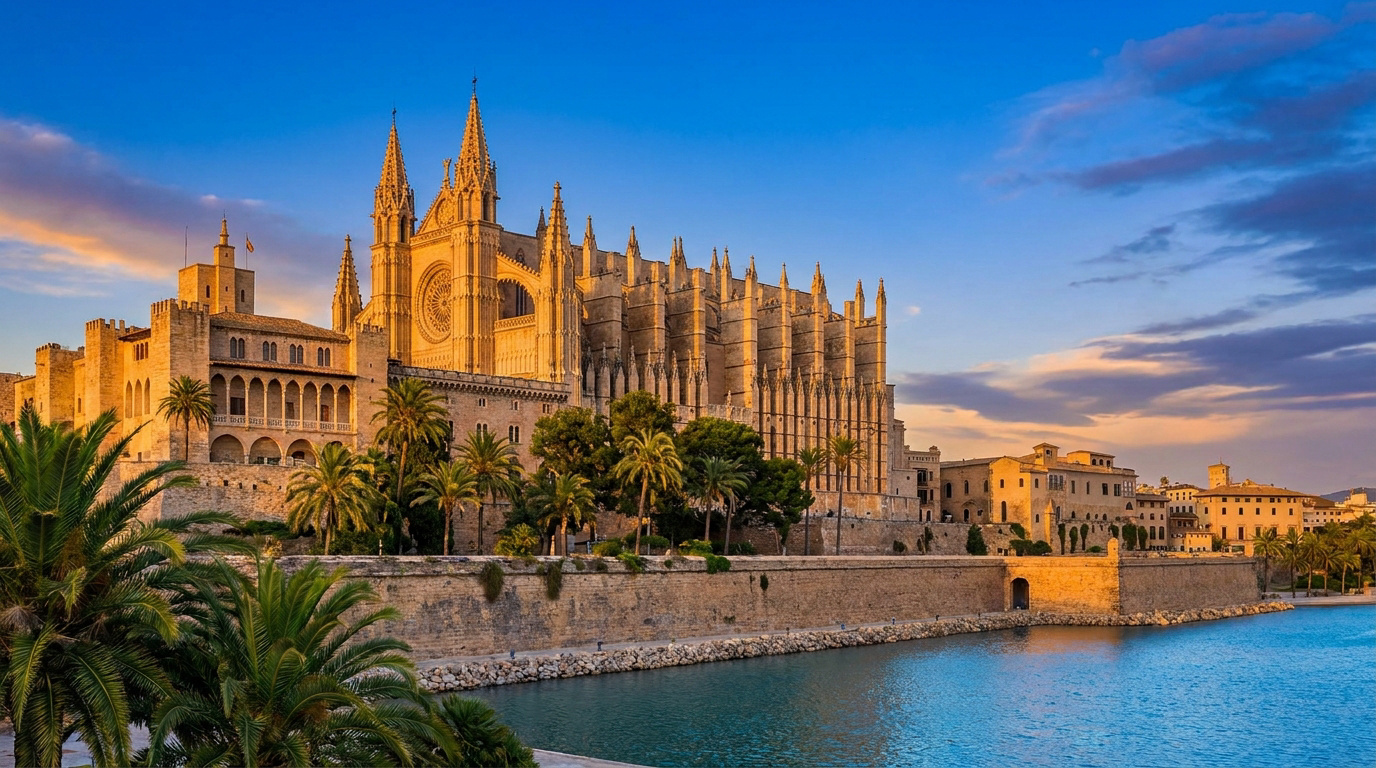
Palma is one of the sunniest cities in the Mediterranean, and the pre-summer window in May and June offers long days and warm, comfortable temperatures.
Most travelers struggle to balance warm weather with the surge of high-season crowds and elevated prices. Our guide identifies the best time of year to visit Palma de Mallorca to ensure you experience the city’s Gothic heritage and cultural sanctuaries under optimal conditions.
- Best Time Of Year To Visit Palma De Mallorca For Sightseeing
- Savvy Budget Planning For Off-Peak Urban Exploration
- Local Festivals And Cultural Events Throughout The Calendar
- Activity-Based Travel Windows For Different Explorer Profiles
Best Time Of Year To Visit Palma De Mallorca For Sightseeing
Palma reaches peak comfort in May and June, ideal for exploring the Gothic Cathedral before July humidity. September offers warm seas and thinner crowds, while January price drops favor urban cultural immersion. This seasonal shift marks the beginning of the perfect window for outdoor exploration.
Optimal Sightseeing In Late Spring (May And June)
The Mediterranean climate is at its most inviting during this period, with long sunny days and mild evenings. For current forecasts and official climate data, check AEMET, Spain’s national weather agency.
Visiting now allows for the pre-summer window advantage. You can access the Cathedral of Santa Maria and Bellver Castle without enduring massive queues. The 24-hour hop-on hop-off bus is an easy way to reach the castle on its hill. It is simply the most efficient way to see the sights.
Long sunny days, warm afternoons, mild evenings. Ideal pre-summer window for sightseeing.
Discover the old town with a local guide on our Palma Old Town Walking Tour (1h15 to 1h30), then step inside with a Palma Cathedral skip-the-line ticket.
Autumnal Warmth And Reduced Crowd Density
September and October bring a distinct shift. As school holidays conclude, the streets return to the locals. You will enjoy the shoulder season calm immediately.
This is the time for focused urban exploration. Visit the Arab Baths or Es Baluard museum without the summer rush. The city feels open and accessible again. Autumn is also perfect for our Old Town & Coastal E-Bike Tour along the seafront.
Visiting Palma in October feels like reclaiming the city, where the golden light hits the sandstone walls without a selfie stick in sight.
Savvy Budget Planning For Off-Peak Urban Exploration
While the weather dictates the vibe, your wallet might prefer the cooler months when the city transforms into a budget-friendly haven.
Winter Discounts On Premium Accommodation
Boutique hotel prices in January and February drop significantly. Travelers often secure luxury for less during this period. Many high-end establishments offer discounts of up to 50% compared to the peak rates seen in August. It is a financial win.
Experience authentic Mallorca through slow travel. Wander into local cafes without reservations. Witness the stunning almond blossoms in the countryside. Immerse yourself in the local culture without the typical summer rush. It feels personal and real.
Choosing the right time of the year ensures maximum value. Planning for winter exploration yields the highest savings for smart travelers.
Finding Flight Deals And Managing Seasonal Availability
Strategic booking windows are essential for savings. We recommend securing tickets 8-12 weeks in advance. Utilize low-cost carriers like Ryanair or Vueling for the most competitive rates. Early action translates to lower overheads.
Winter logistics require careful attention. Regional airports offer fewer direct flights during the low season. You must maintain flexible scheduling to accommodate shifting airline timetables. Direct routes from major European hubs such as London remain reliable.
| Season | Avg. Hotel Price | Flight Availability | Crowd Level |
|---|---|---|---|
| Winter | €60 – €120 | Low | Very Low |
| Spring | €120 – €200 | High | Medium |
| Summer | €250+ | High | High |
| Autumn | €100 – €180 | Medium | Low to Medium |
Local Festivals And Cultural Events Throughout The Calendar
Beyond the price tags, the true soul of Palma reveals itself through its ancient traditions and seasonal festivities.
Religious Heritage And Holy Week Celebrations
Semana Santa transforms the Gothic Quarter into a stage for centuries-old traditions. Hooded penitents march through narrow streets. Slow drumbeats echo against stone walls. It is a somber, powerful display of Majorcan faith.
Travelers must navigate logistical shifts during this period. Museums and shops frequently close on Good Friday. Our recommendation is to verify local opening hours before heading out to avoid disappointment.
Semana Santa (March/April): Museums and shops often close on Good Friday. Check local opening hours in advance.
Summer Solstice And The Sant Joan Festivities
June brings the Nit de Foc, the famous “Night of Fire.” Demons dance through Parc de la Mar amidst cascading fireworks. This spectacle deeply reflects local folklore and the island’s vibrant spirit.
The gastronomic heritage takes center stage during these celebrations. We suggest sampling ensaïmadas paired with seasonal apricots. These flavors define the Majorcan summer experience for any discerning visitor.
Plan your trip around these highlights of the Palma calendar:
- Sant Sebastià, Palma’s patron saint festival (January)
- Nit de Foc (June)
- Feast of Sant Jaume (July)
- Copa del Rey Regatta (August)
Each event offers a distinct perspective on the city’s identity. From maritime excellence to fiery street parties, the calendar remains packed. On summer evenings, our Palma Tapas Tour is a delicious way to soak up the atmosphere.
Activity-Based Travel Windows For Different Explorer Profiles
Choosing the right moment depends entirely on whether you prefer mountain boots or museum passes.
Perfect Windows For Hiking And Outdoor Adventure
Hiking in the Serra de Tramuntana is spectacular during spring. The best months are March to May. You will witness vibrant wildflower blooms across the limestone peaks.
Best hiking: March to May (wildflower blooms). Family timing: Late September. Solo hikers: April.
Profile matching is essential for comfort. Families should aim for late September for milder heat. Solo hikers thrive in April using strategic adventure planning.
The Tramuntana range offers its best trails when the air is crisp and the summer heat has yet to bake the limestone paths.
Urban Architecture And Museum Visits In Winter
Indoor culture provides a refined escape during the cooler months. Explore the Almudaina Palace to appreciate intricate Gothic architecture details without the summer humidity. It is the ultimate time for quiet contemplation.
Infrastructure availability remains excellent as most major sites stay open year-round. You will find a true cultural sanctuary at the Fundació Pilar i Joan Miró, where the lack of crowds allows for intimate viewing. Book your Miró Mallorca Foundation ticket, or save with the Cathedral + Miró combo.
Plan your stay with our Mallorca Ultimate Guide, packed with seasonal tips from locals.
Optimal sightseeing peaks during the mild May-June window or the tranquil September shoulder season. Secure luxury for less in January to maximize your budget before seasonal demand surges. Book your ultimate Mediterranean escape now to experience authentic Mallorca in perfect light.
FAQ
What are the typical weather conditions and sunshine hours in Palma during late spring?
Late spring delivers an exceptional Mediterranean climate, characterized by pleasantly warm temperatures and generous sunshine. In May, visitors can expect daily highs averaging 22.7°C, while June sees a significant increase to 28°C, accompanied by up to 12 hours of daily sunshine and minimal rainfall.
These conditions are ideal for outdoor exploration, as the sea temperature rises from 19°C in May to a comfortable 23°C by June. This pre-summer window ensures optimal visibility for sightseeing before the intense heat of July and August arrives.
What can I expect regarding crowds and climate during the autumn months?
The shoulder season in September and October offers a sophisticated balance of warm weather and reduced crowd density. September maintains a summer-like feel with sea temperatures at 25°C and daily highs of 25°C, yet the atmosphere becomes noticeably calmer as school holidays conclude.
October transitions into a cooler, more tranquil period for urban exploration, with temperatures ranging between 13°C and 24°C. While precipitation increases slightly to 63mm, the city remains highly accessible, allowing for peaceful visits to major landmarks without the mid-summer congestion.
Is Palma de Mallorca a cost-effective destination for a winter getaway?
Winter represents the ultimate luxury for less opportunity, as boutique hotel prices and flight rates drop significantly during the low season. January and February are the coldest months with highs of 15°C, but they offer the most competitive pricing for savvy travelers seeking authentic Mallorca.
Budget-conscious explorers can find round-trip flights for as low as €70-€74, while accommodation rates are substantially lower than peak summer figures. This period is perfect for cultural immersion and enjoying the island’s natural beauty, such as the almond blossoms, at a fraction of the usual cost.
Which local festivals and cultural events should I plan my visit around?
Our curated calendar highlights centuries-old traditions, such as the solemn Semana Santa processions in March or April. For those seeking vibrant local folklore, the Nit de Foc (Night of Fire) in June features spectacular fireworks and demons in Parc de la Mar.
Major events include:
- Nit de Foc (June)
- Feast of Sant Jaume (July)
- Copa del Rey Regatta (August)
- Sant Sebastià (January)
Always verify local opening hours during these periods, as some administrative and commercial sites may close for public holidays.
When is the best time for hiking in the Serra de Tramuntana?
For adventure planning, the window from March to May is unparalleled, coinciding with vibrant wildflower blooms and crisp air. Late September also provides an excellent alternative for families and hikers, as the summer heat begins to dissipate.
The Tramuntana range offers its best trails when the air is crisp and the summer heat has yet to bake the limestone paths. These months provide the necessary thermal comfort for rigorous outdoor activities that would be challenging during the peak 30°C+ temperatures of July.
Are museums and historical sites open for sightseeing during the winter?
Palma serves as a cultural sanctuary year-round, with most major architectural sites and museums remaining open during the winter months. The Almudaina Palace and the Fundació Pilar i Joan Miró are particularly enjoyable in the off-season due to the lack of queues and the cool, comfortable indoor temperatures.
Winter visits allow for a deeper appreciation of Gothic architecture without the distractions of large tour groups. For those focused on indoor culture and heritage, the months of November through March provide a quiet, focused environment for historical discovery.
See all our Palma city tours: walking, e-bike, tapas and market tours. Questions about your dates? Ask in our Mallorca Travel Community.
Some links in this article are affiliate links. If you book through them, Palma Tour Mallorca may receive a commission at no extra cost to you.
← Explore all our Mallorca articles
One response to “Best time of year to visit Palma de Mallorca for sightseeing”
-
[…] you fix your dates, read about the best time of year to visit Palma for sightseeing and how to buy Palma cathedral tickets in […]
Leave a Reply