
There are few single-day experiences in Mallorca that combine scenery, history and nostalgia as neatly as the vintage Tren de Sóller from Palma to Sóller and the little tram (Tranvía) that runs from Sóller down to the Port de Sóller.
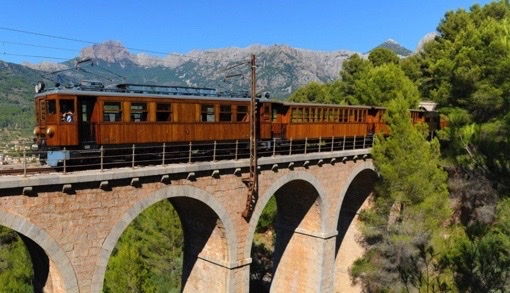
- Tren de Sóller (Palma → Sóller) — a narrow-gauge (914 mm) electric railway dating from 1912 that runs roughly 27 km from Palma through the foothills and the Serra de Tramuntana into the Sóller valley. It’s famous for its wooden vintage carriages, tunnels and stone viaducts.
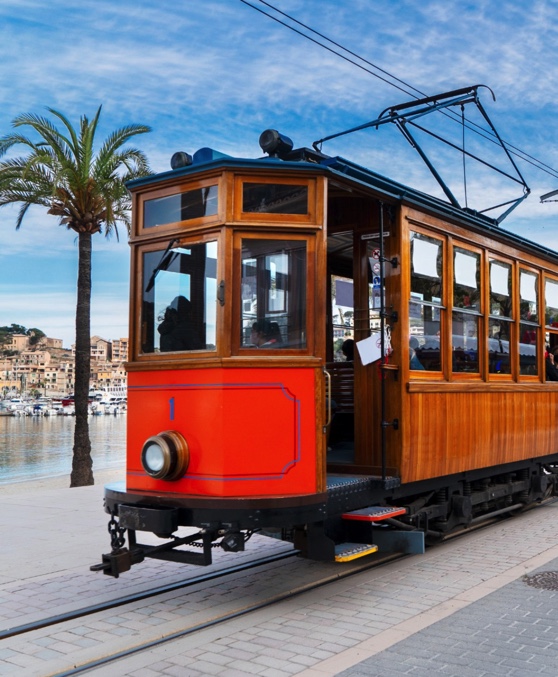
- Tranvía de Sóller (Sóller → Port de Sóller) — a short heritage tramway of about 4.868 km linking the town of Sóller with its coastal port. The tram line opened in 1913 and uses classic tramcars that run through the town centre and down to the harbour.
A bit of history: why and when they were built
The idea for the railway came at the start of the 20th century when Sóller’s citrus industry (notably oranges and lemons) was booming. The valley was relatively isolated by the mountains, and moving large quantities of fruit by road was slow and difficult. Profits from the orange trade funded the line: construction began in 1911 and the railway opened in 1912, primarily to speed the transport of agricultural goods and to connect locals with Palma. The tram followed the next year (1913) to link the town with its port.
Today both survive as working heritage lines: they still carry locals and tourists, but their role has shifted from freight lifeline to cultural-tourist attraction and local transport.
The route & what you see
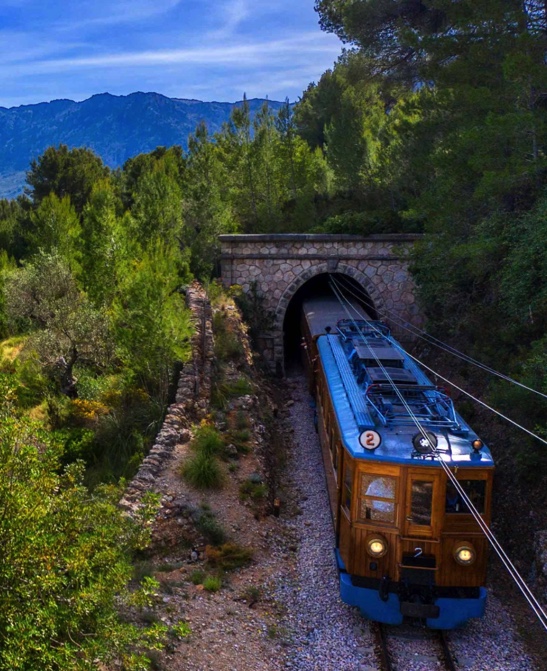
- Palma → Sóller (train): the line cuts through farmland and mountains, crosses stone viaducts and goes through multiple tunnels — the landscape is a highlight. The journey feels like stepping back into the early 20th century because of the wooden carriages and slower, relaxed pace.
- Sóller → Port (tram): a pleasant 15–20 minute tram ride that passes through Sóller’s main square, suburban streets, olive groves, and finally along the pedestrianised seafront at the marina — ideal for reaching the beach or boats.
Key differences between the train and the tram
- Purpose & length: the train is a longer interurban railway (Palma ↔ Sóller, ~27 km) originally built for freight and passengers; the tram is a short local line (≈4.9 km) connecting Sóller town with the port.
- Scale & speed: the train traverses tunnels, viaducts and mountain scenery at a slower, scenic pace; the tram runs on streets and simple reserved track, sharing space with town traffic in places.
- Rolling stock & feel: both use heritage rolling stock, but the train’s wooden interurban carriages feel like a small vintage train journey, while the tramcars are classic street trams better suited to short seaside hops.
- Ticketing & operation: the train is operated by the same company that owns the tram (Ferrocarril de Sóller S.A.), and there are combined tickets — but availability and online sales rules differ (see booking notes below).
Why you should book the train (and tram)
- Unique heritage experience: wooden carriages, century-old infrastructure and an authentic atmosphere make it more than transport — it’s a moving museum.
- Spectacular scenery: the train crosses viaducts and passes through tunnels with views of the Tramuntana mountains and citrus groves — perfect for photos and a relaxed day trip.
- Convenient day trip: you can start in Palma, explore Sóller’s town centre, take the tram to the port for lunch/beach, and return the same day — the combination suits visitors with limited time.
- Cultural & local appeal: it’s a taste of Mallorcan history (the orange trade, local engineering) and still used by residents — not just a theme-park ride.
Practical booking info — where and how to buy tickets
- Official site (recommended for combined tickets): Tren de Sóller’s official site sells combined Train + Tram round-trip tickets online (availability and advance sales rules apply). Online sales are mainly for the combined ticket; single legs or certain other ticket types are often sold at the station on the day. Check the official booking page for current prices, schedules and online availability.
- At the station / ticket office: if online tickets are sold out or you want just one leg, go to the Palma or Sóller ticket offices on the day — many visitors still buy at the station. Note: popular departures (especially in summer) can sell out, so early arrival or booking the combined ticket online is wise.
- Tour operators & combined excursions: some local tour companies package the train+tram with boat trips (e.g., Sa Calobra) or guided excursions; these can be convenient if you want a full-day guided itinerary.
OFFICIAL WEBSITE: https://trendesoller.com
Tips & quick advice
- Book the combined Palma ⇄ Sóller ⇄ Port ticket online if you can (it’s the easiest way to guarantee a seat).
- If you prefer flexibility, buy at the station early in the morning — but be ready for queues during high season.
- Camera ready: window seats facing the mountains/viaducts are best for photos.
- Combine activities: plan lunch in Port de Sóller and a walk along the marina — the tram drops you right at the seafront.
The Tren de Sóller and the Tranvía to Port de Sóller are living pieces of Mallorcan history: originally built to free the valley’s orange trade from the mountains, today they’re treasured scenic rides that let visitors experience heritage, landscape and seaside in one day. If you value scenery, history and a relaxed pace, booking the train (and the tram) is a great choice — and the official Tren de Sóller website is your starting point for tickets and timetables.
Floris and Rony
 Palma Tour Mallorca
Leave a comment